Mandegar Padeer
Jordan
Tehran-2025-Residential
Residential Building
A Contemporary Urban Residence Emphasizing Vertical Rhythm and Refined Material Contrast
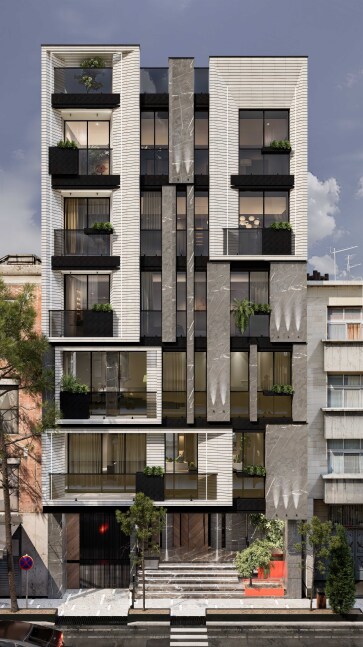
This five‑story residential building located in the Zafar district of Tehran is designed as a modern urban dwelling that balances elegance, functionality, and architectural identity within a dense city fabric. The façade composition is defined by strong vertical elements, contrasting materials, and carefully framed openings that create depth, rhythm, and visual interest.
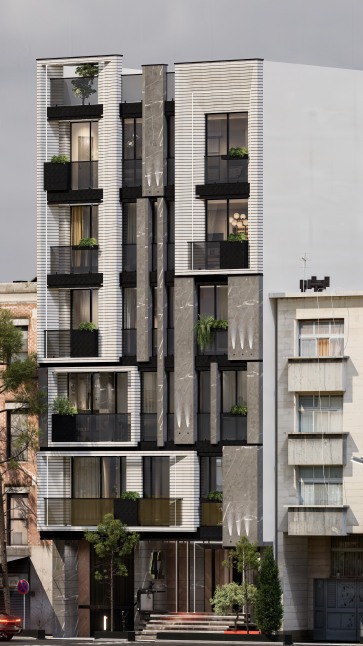
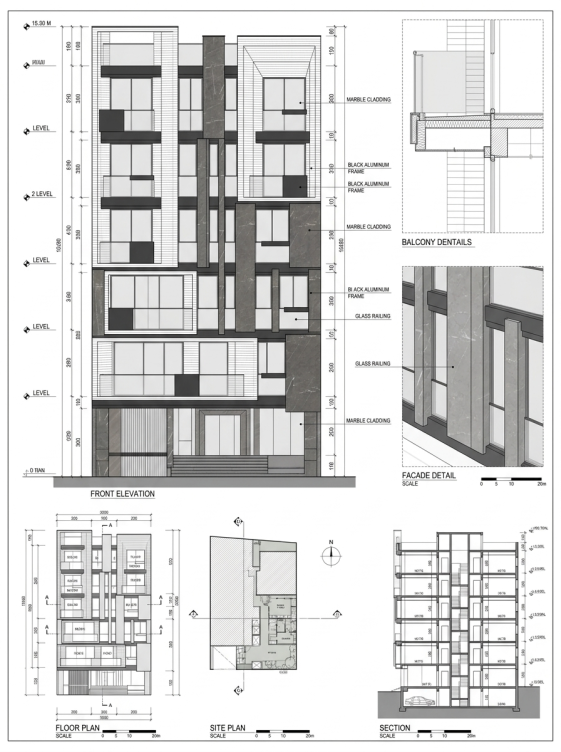
The architectural language combines light horizontal stone textures with darker marble panels and black metal elements, forming a sophisticated contrast that enhances the building’s contemporary character. The façade is organized around a central vertical axis that visually anchors the composition while distributing balconies and openings symmetrically across the elevation.
This five‑story residential building located in the Zafar district of Tehran is designed as a modern urban dwelling that balances elegance, functionality, and architectural identity within a dense city fabric. The façade composition is defined by strong vertical elements, contrasting materials, and carefully framed openings that create depth, rhythm, and visual interest.
The architectural language combines light horizontal stone textures with darker marble panels and black metal elements, forming a sophisticated contrast that enhances the building’s contemporary character. The façade is organized around a central vertical axis that visually anchors the composition while distributing balconies and openings symmetrically across the elevation.
Design Process
The design process for this project focused on creating a refined residential building that responds to the scale, density, and architectural character of the Zafar neighborhood.
1. Site and Context Analysis
The process began with studying the surrounding urban context, building heights, street width, and neighboring façades. The aim was to design a building that respects the existing urban rhythm while establishing a distinctive identity.
2. Massing and Façade Concept Development
Initial concepts explored ways to emphasize verticality within the narrow urban frontage. The final approach introduced a central vertical element combined with framed side volumes to create balance and proportion.
3. Material Selection
Materials were chosen based on durability, elegance, and compatibility with Tehran’s climate. Linear stone cladding provides texture and brightness, while darker marble and metal elements add depth and contrast.
4. Balcony and Opening Strategy
Balconies were positioned to ensure adequate daylight, privacy, and outdoor living space for residents. Transparent railings and recessed layouts maintain visual lightness in the façade.
5. Façade Detailing and Depth
Through digital modeling and façade studies, the thickness of frames, panel proportions, and shadow lines were refined to achieve a balanced composition and dynamic light interaction during the day.
6. Landscape and Green Elements
Small planted areas were incorporated into balconies and the entrance zone to soften the architectural geometry and strengthen the building’s residential character.
7. Lighting Design
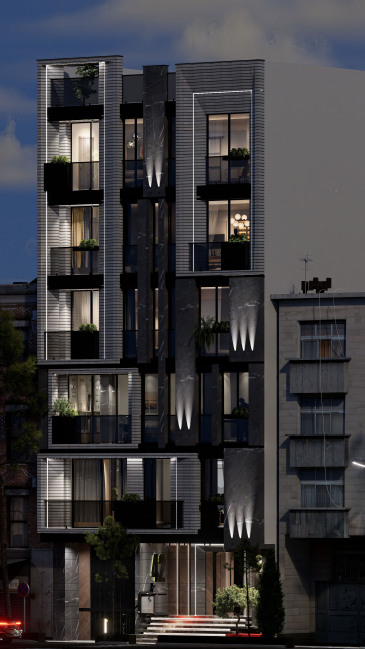
Exterior lighting was carefully integrated to highlight key vertical elements and textures, ensuring the building maintains a strong architectural presence during nighttime.
1. Site and Context Analysis
The process began with studying the surrounding urban context, building heights, street width, and neighboring façades. The aim was to design a building that respects the existing urban rhythm while establishing a distinctive identity.
2. Massing and Façade Concept Development
Initial concepts explored ways to emphasize verticality within the narrow urban frontage. The final approach introduced a central vertical element combined with framed side volumes to create balance and proportion.
3. Material Selection
Materials were chosen based on durability, elegance, and compatibility with Tehran’s climate. Linear stone cladding provides texture and brightness, while darker marble and metal elements add depth and contrast.
4. Balcony and Opening Strategy
Balconies were positioned to ensure adequate daylight, privacy, and outdoor living space for residents. Transparent railings and recessed layouts maintain visual lightness in the façade.
5. Façade Detailing and Depth
Through digital modeling and façade studies, the thickness of frames, panel proportions, and shadow lines were refined to achieve a balanced composition and dynamic light interaction during the day.
6. Landscape and Green Elements
Small planted areas were incorporated into balconies and the entrance zone to soften the architectural geometry and strengthen the building’s residential character.
7. Lighting Design
Exterior lighting was carefully integrated to highlight key vertical elements and textures, ensuring the building maintains a strong architectural presence during nighttime.
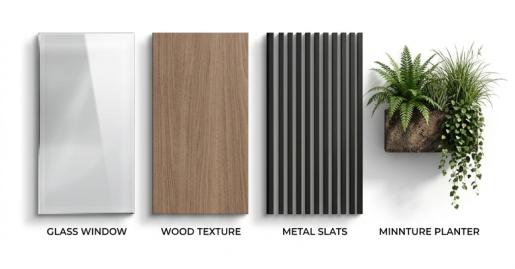
Material & Process
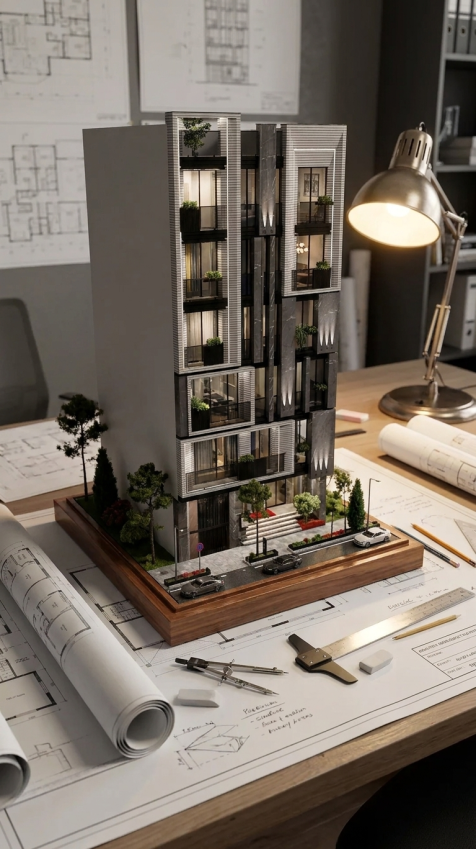
Vertical Façade Composition
The design emphasizes verticality through elongated stone panels and narrow window strips that run across multiple floors. These elements visually stretch the building’s height and create a refined architectural rhythm.
Material Contrast and Texture
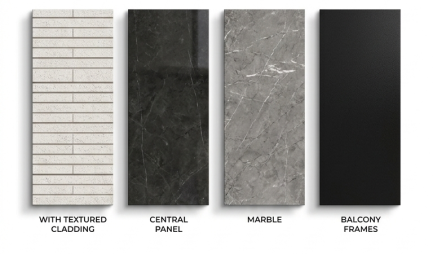
A palette of light linear stone cladding, dark marble panels, and black metal balcony elements generates a balanced contrast. The lighter surfaces provide brightness and clarity, while the darker elements introduce depth and sophistication.
Balconies and Green Integration
Recessed balconies with transparent railings provide private outdoor spaces for residents while maintaining visual openness. Integrated planters soften the rigid geometry and introduce natural greenery into the façade.
The design emphasizes verticality through elongated stone panels and narrow window strips that run across multiple floors. These elements visually stretch the building’s height and create a refined architectural rhythm.
Material Contrast and Texture
A palette of light linear stone cladding, dark marble panels, and black metal balcony elements generates a balanced contrast. The lighter surfaces provide brightness and clarity, while the darker elements introduce depth and sophistication.
Balconies and Green Integration
Recessed balconies with transparent railings provide private outdoor spaces for residents while maintaining visual openness. Integrated planters soften the rigid geometry and introduce natural greenery into the façade.
dr.z_abbaszadeh
dr.amir_hossein_eslampour
© mandegare padeer All rights reserved.

Mandegare Padeer
Phone :
0912- 3086983
Instagram :
Mandegarpadeer@gmail.com
zoabbaszadeh@yahoo.com
www.eslampour@yahoo.com
Email :
No 28, Unit 2, Alef Square ,Moqadas Ardabili St , Zafaranieh , Tehran , Iran