Mandegar Padeer
Rajaei Facade
Tehran-2025-Commercial
Residential Building
A Contemporary Urban Residence Defined by Clean Geometry, Warm Textures, and Integrated Greenery
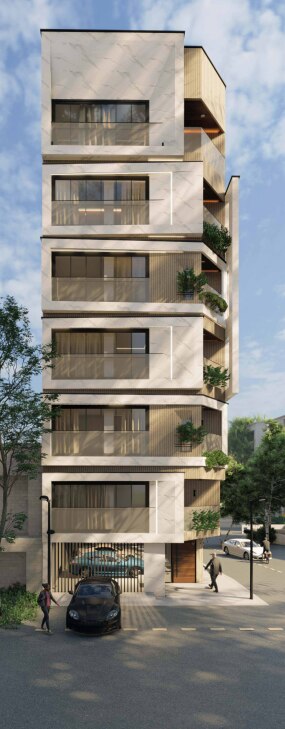
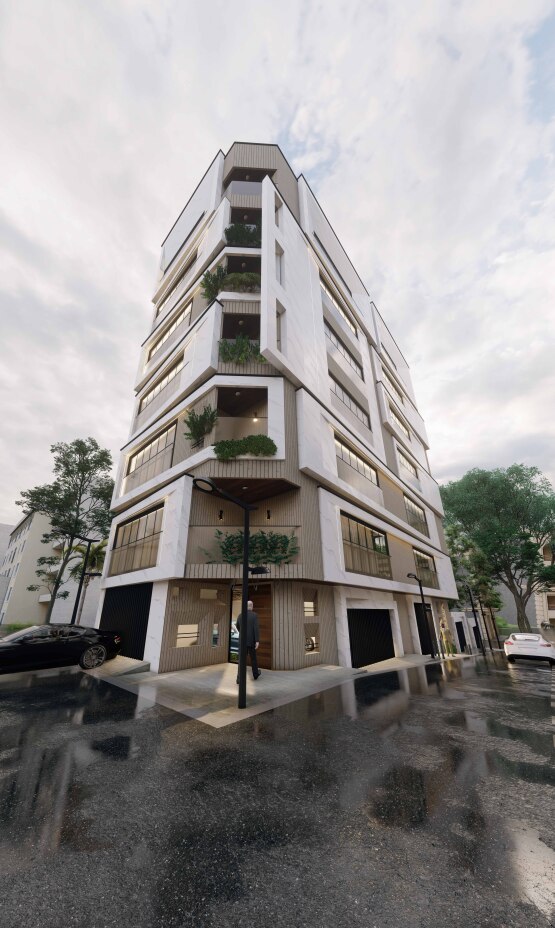
This residential building in Tehran showcases a refined contemporary design that balances elegance, functionality, and urban comfort. The architectural expression is driven by clean geometric lines, a harmonious contrast of light stone-like cladding and warm vertical wooden slats, and the thoughtful integration of greenery throughout the façade. The result is a dynamic yet calm residential presence that enriches the neighborhood’s visual character.
This residential building in Tehran showcases a refined contemporary design that balances elegance, functionality, and urban comfort. The architectural expression is driven by clean geometric lines, a harmonious contrast of light stone-like cladding and warm vertical wooden slats, and the thoughtful integration of greenery throughout the façade. The result is a dynamic yet calm residential presence that enriches the neighborhood’s visual character.
Design Process
The design process was rooted in creating a modern, livable, and visually engaging residential building that responds to the constraints and opportunities of the urban site in Tehran.
Site and Context Analysis:
The design team began by studying the neighborhood’s scale, street width, sunlight exposure, and architectural patterns. This analysis informed the massing strategy and helped determine the façade rhythm and window proportions.
Concept Development:
The guiding concept revolved around creating a layered façade that combines clean structural frames with warmer infill elements. The aim was to achieve a composition that feels both modern and human-centered.
Material Strategy:
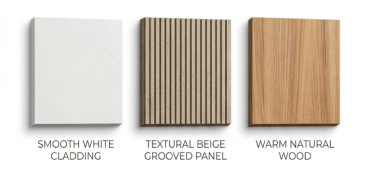
Durable, elegant materials—such as stone-textured panels and wooden slats—were chosen to withstand Tehran’s climate while offering aesthetic longevity. Material contrasts were used deliberately to highlight depth and create a visually coherent appearance.
Daylight and Ventilation Optimization:
Window placement, balcony design, and façade depth were fine‑tuned to allow maximum natural light into living spaces while controlling heat gain. Large openings were aligned with interior functions to enhance comfort and energy efficiency.
Greenery Integration:
Planter boxes were incorporated early in the design process. Their placement was coordinated with structural grids and balcony recesses, ensuring harmony between built form and natural elements.
Façade Articulation:
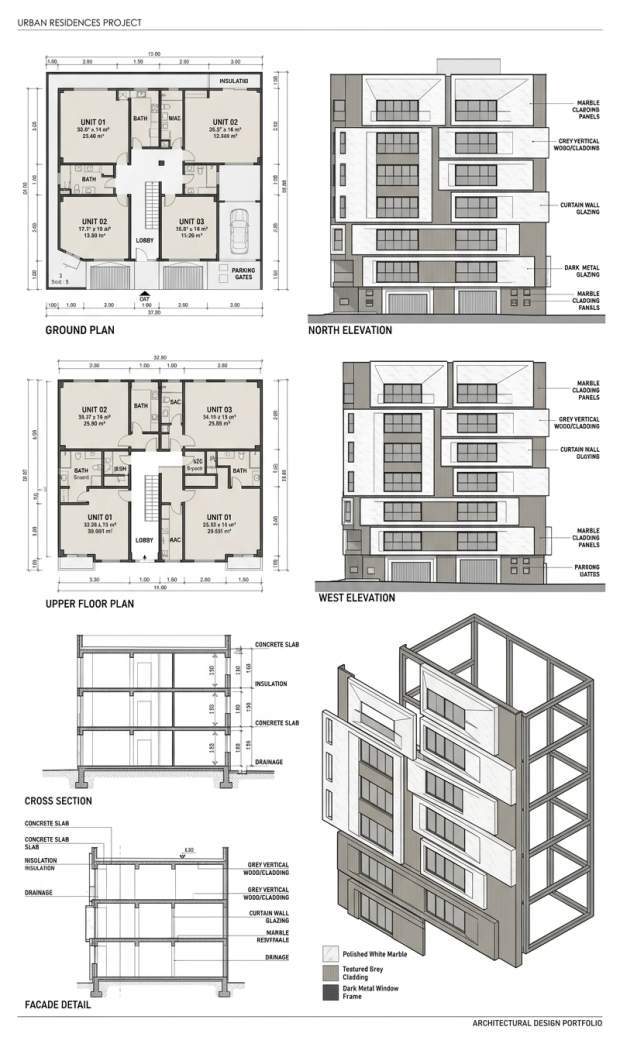
Using 3D modeling, multiple façade iterations were evaluated to refine proportions, frame thickness, and shadow quality. The final design achieves a carefully balanced hierarchy of solid, void, and natural elements.
Public Interface and Entrance Design:
A welcoming ground-floor zone was developed with warm materials, subtle lighting, and controlled transparency. This approach strengthens the building’s connection to the street and enhances its residential identity.
Site and Context Analysis:
The design team began by studying the neighborhood’s scale, street width, sunlight exposure, and architectural patterns. This analysis informed the massing strategy and helped determine the façade rhythm and window proportions.
Concept Development:
The guiding concept revolved around creating a layered façade that combines clean structural frames with warmer infill elements. The aim was to achieve a composition that feels both modern and human-centered.
Material Strategy:
Durable, elegant materials—such as stone-textured panels and wooden slats—were chosen to withstand Tehran’s climate while offering aesthetic longevity. Material contrasts were used deliberately to highlight depth and create a visually coherent appearance.
Daylight and Ventilation Optimization:
Window placement, balcony design, and façade depth were fine‑tuned to allow maximum natural light into living spaces while controlling heat gain. Large openings were aligned with interior functions to enhance comfort and energy efficiency.
Greenery Integration:
Planter boxes were incorporated early in the design process. Their placement was coordinated with structural grids and balcony recesses, ensuring harmony between built form and natural elements.
Façade Articulation:
Using 3D modeling, multiple façade iterations were evaluated to refine proportions, frame thickness, and shadow quality. The final design achieves a carefully balanced hierarchy of solid, void, and natural elements.
Public Interface and Entrance Design:
A welcoming ground-floor zone was developed with warm materials, subtle lighting, and controlled transparency. This approach strengthens the building’s connection to the street and enhances its residential identity.
----------------------------------------------------------------------------------------------------------------------------------------------------
Material & Process
Modern Minimalist Façade:
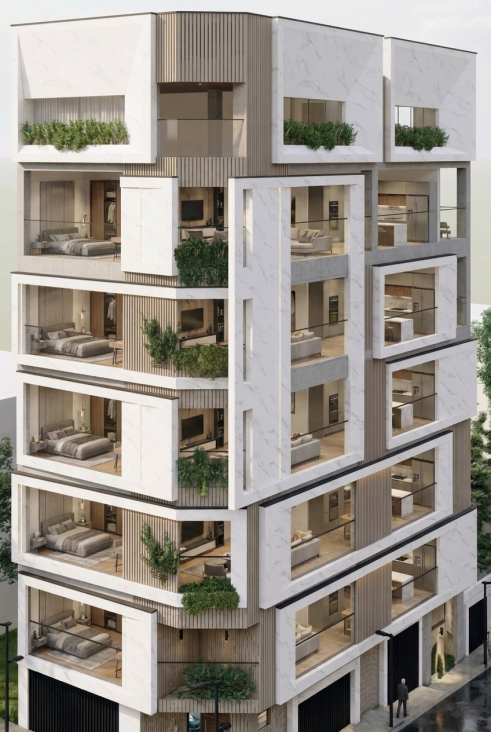
The building is shaped by strong rectilinear frames in a light, stone-textured finish, creating depth and rhythm across the elevations. These frames accentuate each floor and maintain a unified architectural identity.
Warm Material Palette:
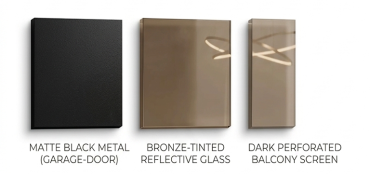
The combination of marble-like white panels and vertical wooden fins establishes a balance between sophistication and natural warmth. This palette elevates the building’s aesthetic while giving it a welcoming residential character.
Large Panoramic Windows:
Expansive glazing maximizes natural light, enhances visual openness, and creates seamless connections between interior living spaces and the city outside.
The building is shaped by strong rectilinear frames in a light, stone-textured finish, creating depth and rhythm across the elevations. These frames accentuate each floor and maintain a unified architectural identity.
Warm Material Palette:
The combination of marble-like white panels and vertical wooden fins establishes a balance between sophistication and natural warmth. This palette elevates the building’s aesthetic while giving it a welcoming residential character.
Large Panoramic Windows:
Expansive glazing maximizes natural light, enhances visual openness, and creates seamless connections between interior living spaces and the city outside.
Integrated Greenery:
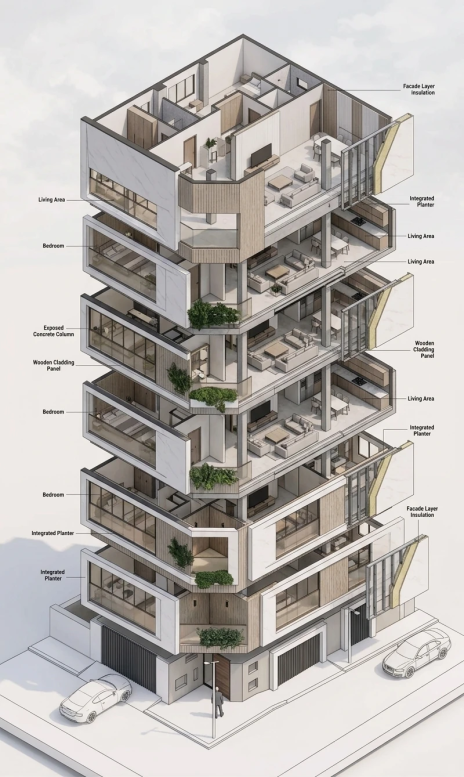
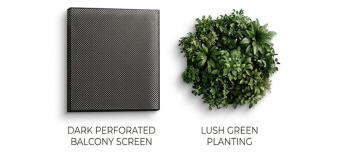
Planters embedded within the façade bring nature into the vertical volume of the building. These green pockets soften the geometry, improve air quality, and add a human-scale touch to the façade.
Dynamic Corner Balconies:
The corner cutouts and recessed balconies introduce variation and shadow play, enriching the building’s form while offering enjoyable private outdoor spaces.
Ground-Floor Transparency:
A refined entrance with natural materials and controlled transparency creates an inviting arrival experience, while vertical louvers provide privacy for the parking level behind.
Planters embedded within the façade bring nature into the vertical volume of the building. These green pockets soften the geometry, improve air quality, and add a human-scale touch to the façade.
Dynamic Corner Balconies:
The corner cutouts and recessed balconies introduce variation and shadow play, enriching the building’s form while offering enjoyable private outdoor spaces.
Ground-Floor Transparency:
A refined entrance with natural materials and controlled transparency creates an inviting arrival experience, while vertical louvers provide privacy for the parking level behind.
dr.z_abbaszadeh
dr.amir_hossein_eslampour
© mandegare padeer All rights reserved.

Mandegare Padeer
Phone :
0912- 3086983
Instagram :
Mandegarpadeer@gmail.com
zoabbaszadeh@yahoo.com
www.eslampour@yahoo.com
Email :
No 28, Unit 2, Alef Square ,Moqadas Ardabili St , Zafaranieh , Tehran , Iran